Dovanghelia
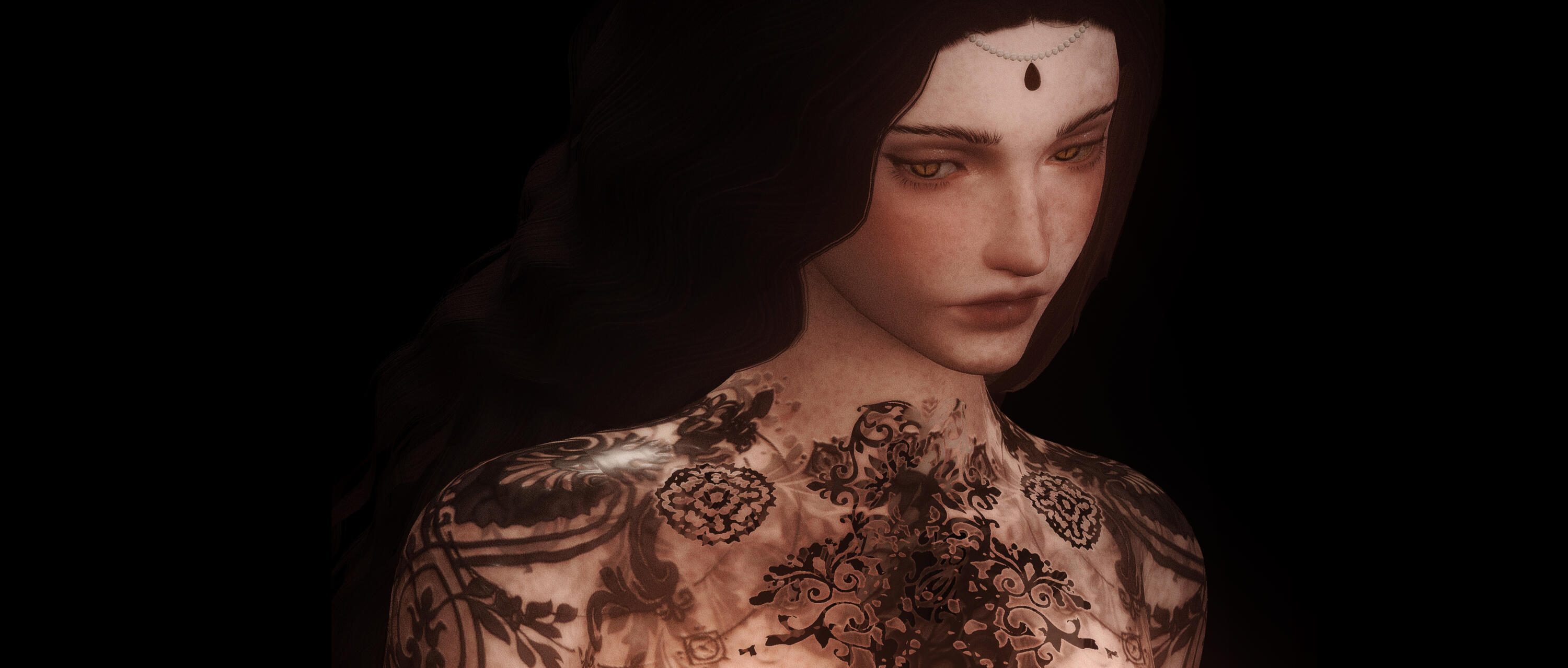
Dovanghelia, written by lili. established march, 2026
A miracle so profound may be indistinguishable from horror

Guidelines
I'd walk so far just to take the injury of finally knowing you
— ooc.
about the author.
Hello, if you're here it might be because you're curious about rp. While I am new to it on XIV, I am not new to roleplay itself. I've been actively writing with close friends for years and am someone whose writing style is layered and abundant in detailed descriptions, but I adapt to my roleplay partner's preferences.I gravitate towards dark fantasy storylines/scenarios and I am heavily inspired by Soulsborne games (especially Elden Ring) and medieval horror books. I tend to use concepts that I find interesting and incorporate them to Dovanghelia's storyline.
Mine is not an IC account.
I welcome ingame rp, but elaborate storylines are comfier on DMs/Discord.
Read my DNF/DNI carrd before proceeding.
— socials
sites i am on
— one.
foreword
If my boundaries aren't respected I will not hesistate to block.
— three.
about boundaries
DO NOT: Erotic Roleplay. I am not interested in my character engaging in erotic roleplay or scenarios. I don't think there's a lot to say regarding this, it's not something I want to partake in. Please do not expect erotic interactions with my character/approach with said intentions. You'd only be wasting my time, and yours too. I am okay with exploring intimacy through different approaches.
— five.
about power
DO NOT: IC equals OOC, metagaming and Godmode.I am Dove's writer, not her; there are very clear boundaries between IC and OOC. Please do not rely on/cheat through metagaming.If you think your character holding some sort of knowledge on Dovanghelia will help enrich the storyline discuss it with me beforehand. Absolutely no godmode.
— seven.
rules
DO NOT: Underage writers/characters. Harassment.I am on my twenties and I wish to write with people my age and older, this applies to Dove's bonds too.I am fine with conflict, violence and dark/mature themes (always with boundaries) not harassment or behaviours/storylines that go against my dni/dfi criteria.
— two.
about romance
I welcome romance as long as both parties agree on the existence of chemistry between characters.
— four.
about connections
I find them to be quite an interesting tool to cultivate/develop forthcoming plots. The only thing I'd ask for would be a discussion between writers so it makes sense lore-wise for our characters and everything is clear.These connections aren't limited to cordial relationships!
— six.
about lore-bending and conflict
I am okay with lore-bending as long as it doesn't break immersion for both parties. I don't faithfully follow canon myself.Fine with violence, always respecting boundaries. Absolutely no permadeath. Please don't injure my character without discussing it with me beforehand.
— eight.
rule title.
» NOTE: Please understand availability/lack of.I tend to be rather busy. Some days (and for different reasons) I'll be unable to offer a response and my roleplay partner/partners will be informed of this.We are all familiar with writer's block, please understand me when I am going through it!
Dossier
All my love and terror balanced there between those eyes
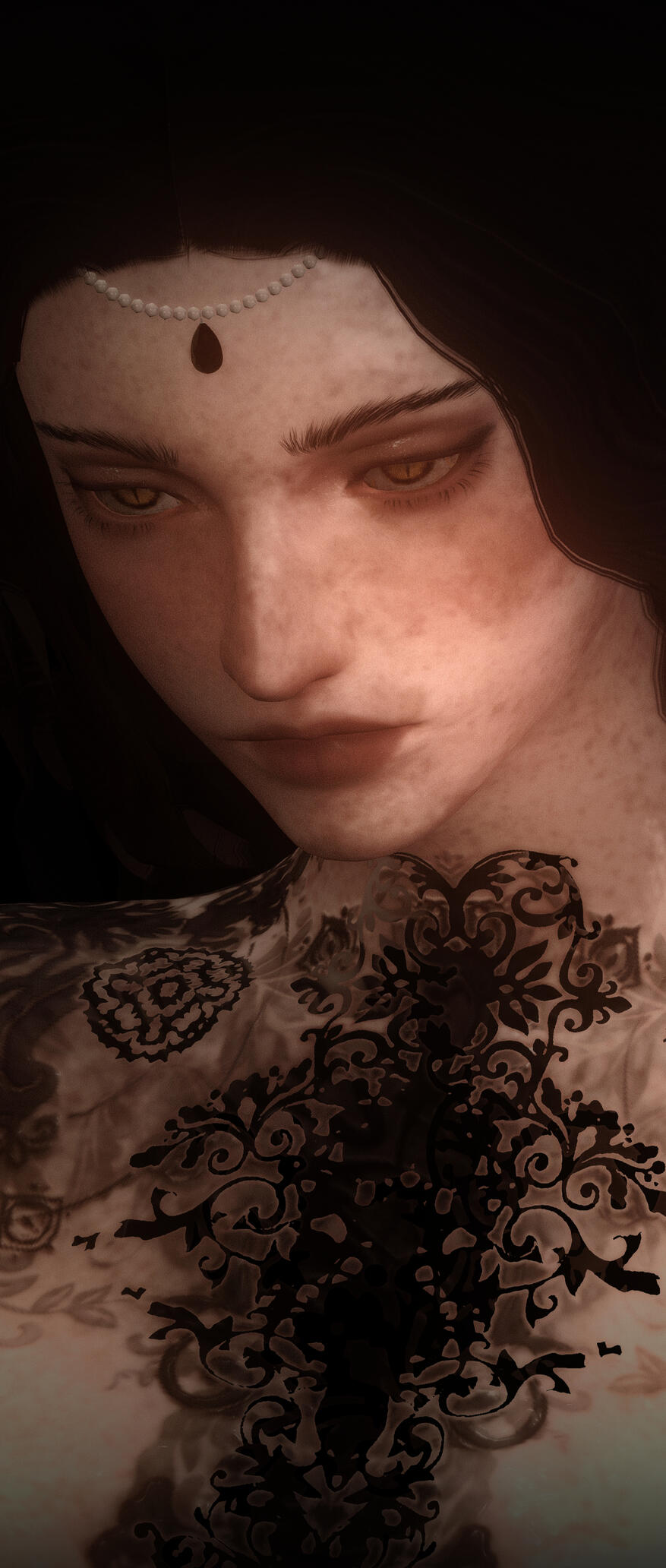
"Death does not come all at once; it leaves many of us in the sunlight behind, to grapple with a loss that comes seemingly out of order. Our own rhythms distract us from the procession."
Name Dovanghelia di Viegardis
Aliases/epithets Dove/Dova, Sister Custodia (former, chosen), The Moon-Scented, Blood Saint
Age Twenty-eight years old
Race Hyur, Midlander
Birthday Unknown (to her), 28th Sun of the First Umbral Moon
Pronouns She/her
Sexuality Lesbian, Femme
Height 5' 7” feet / 171cm tall
Hair color Dark Auburn
Eye color Yellow, with the presence of crosses as irises. Replaced with the flame of frenzy when afflicted
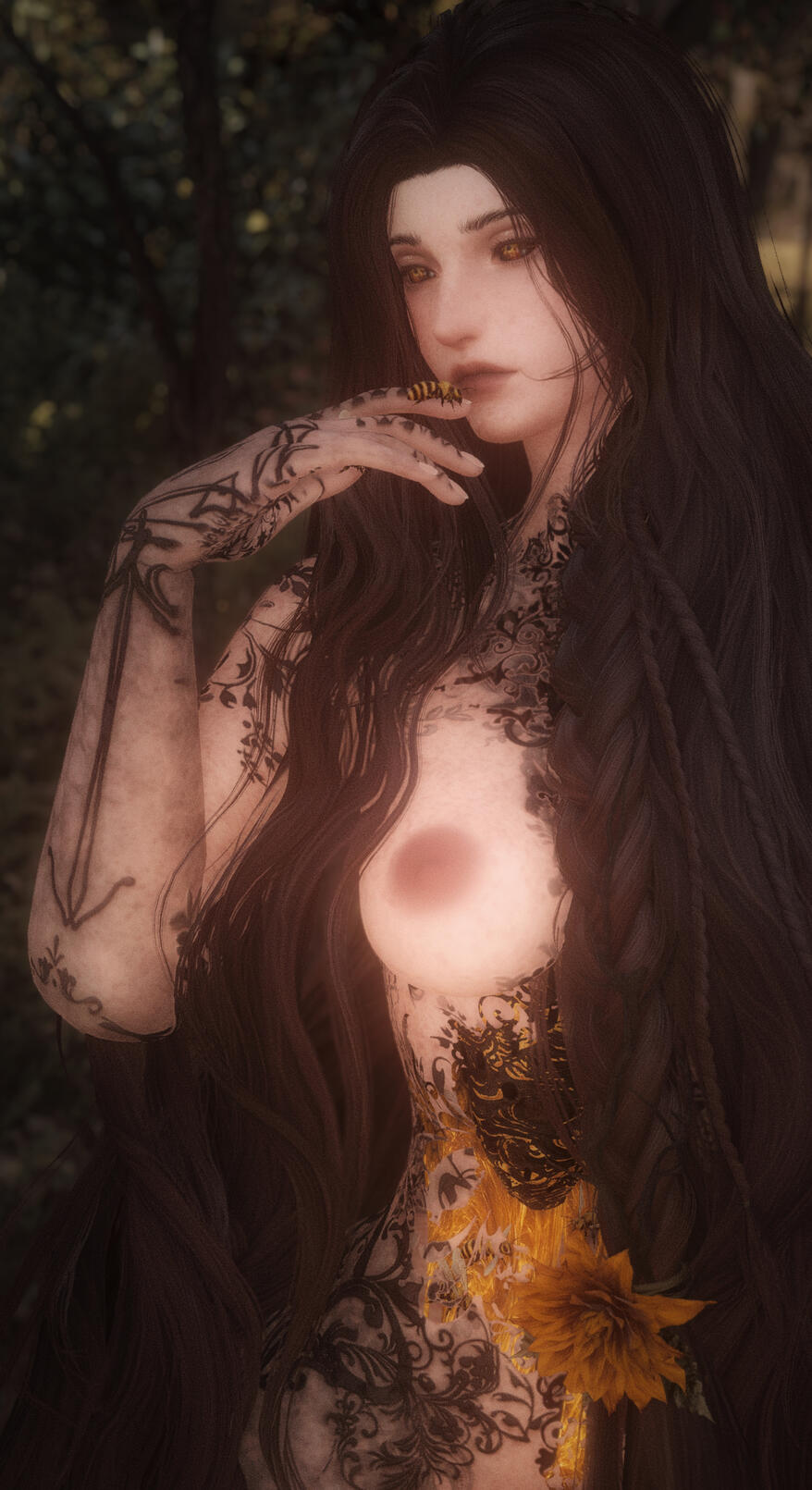
Notable features Vitiligo and freckles across the entirety of her body. Filigree composition extending from the neck down, thoracic cavity that presents itself following the ornamental work previously mentioned, with its interior housing a beehive born from the metamorphosis of her organs. All the upper body skeletal parts that have survived consist on a handful of ribs, the spine and pelvis. Lack of any natural smell, biological yet accentuated by the Flame of Frenzy.
Voice claim The Firekeeper from Dark Souls III.
Job/Occupation Undertaker, Tomb Prospector, Reaper (Rudimental, lacking Voidsent), Anatomist scholar and Alchemist, Guiding Maiden, Beekeeper (formerly)
Place of origin Coerthas
Home Nomad, varies frequently
Affiliation None
Family No remaining relatives, whether biological or adoptive
Marital status Single
Alignment Neutral good, reliable
MBTI ESFJ
Likes Alchemy, scented candles, fragrances, desolate areas, bird watching, daffodils, dim lit habitats, outdoors reading, make up, bugs, incense, mimes, calligraphy
Dislikes Winter, loud noises, pranks, (given) cheesy public displays of affection, individuals who seek closeness too quickly
The Flame of Frenzy Little is known about the arrival of the Flame of Frenzy in the abbey, although it is theorized that the shortage of food (after the arrival of the Eclipse of Rot) and the vigorous presence of faith might've been the reasons why it found its home. Dovanghelia, youngest of them all and with a faith that had been quivering for a while, was found as the sole survivor of a flame that obliterated everything in its wake. She was found mourning out loud as she resisted the Flame in the only place that appeared untouched by turmoil: the abbey's chapel.Before the awakening of the Flame, Dovanghelia's contributions to the abbey (and nearby priories) were both plenty and significant (tending to its apiaries) yet questionable. In a period of rot that naturally lead to excruciating starvation, she relied on the exercise of alchemy in order to keep and feed those around and, while the procedures were questionable, they kept the abbey from facing death or feeding off rats and scraps.As a consequence of the Flame, Dovanghelia is able to wield her own Frenzied spine, extracting it from her mouth, its transverse and spinous processes elongating and wrapping around its own self.
Personality Dovanghelia's personality characterizes itself by its extroversion, a feature presented as an inconvenience throughout her life, especially during her childhood years. While curious, Dove doesn't concern herself to the point of being described or coming off as inquisitive. She's reliable when encountering someone in need, yet her methodology could be described as rather erratic, inusual. Dovanghelia is often talkative, outspoken, endearing, with her demeanor making her appear coquettish, even.It's uncommon to find her immersed in her own thoughts, as she often reserves abstraction for her time spent in solitude and is attuned to the environments that surround her.
— moodboard.


— quotes.
notable quotes.
"If these heights should bring my fall, let me be your own Icarian carrion. If the wind turns, If I hit a squall, allow the ground to find its brutal way to me."
“Horror shapes character. And it did happen.”
"When the world rots, we set it afire. for the sake of the next world. it's the one thing we do right, unlike those fools on the outside."
"Mea culpa, mea culpa, mea maxima culpa."
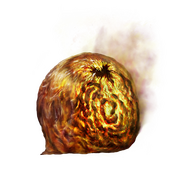
A miracle so profound may be indistinguishable from horror
— headcanons.
headcanons.
Headcanon The fragments left behind by Dovanghelia's summon of her own spine as weapon are frenzied and receive the condition of second-class relic, as they are particles of an outer entity believed to be a god.Headcanon While Eldenievel receives credit for the only cure for scarlet rot (it being unalloyed gold (achieved through the philosopher's stone), Dovanghelia's approach proves to be just as effective yet hers is, too, attained through alchemical means. Dovanghelia, with almost no means and in times of starvation, studied the cycle of putrefaction and reversed it.Headcanon The flame of frenzy doesn’t differentiate, accommodate or divide, as it's been proven that its nature can affect draconic individuals.
— relevant npcs
tropes & cliches.
Bonds Ingame NPCs (or Original Characters) that are relevant in Dove's story.
Character Name
Character Name
Character Name
Character Name
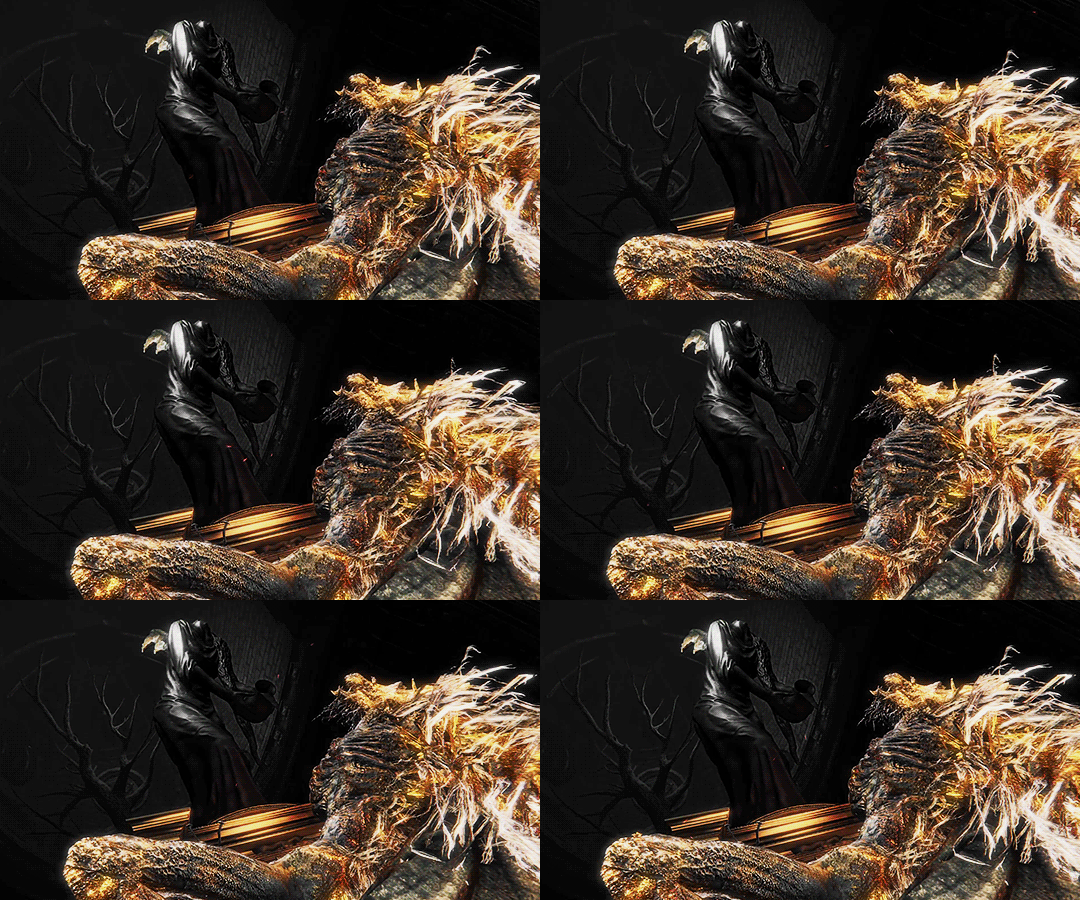
— symbolisms.
symbols & motifs.
Symbols Overarching symbols in Dove's story.
Honey and blood, often found merged
Grapes as symbol of divinity and abundance
Bees, and their religious relevance
The Three Fingers, symbol of unconscionable and final cleansing
Symbol 5
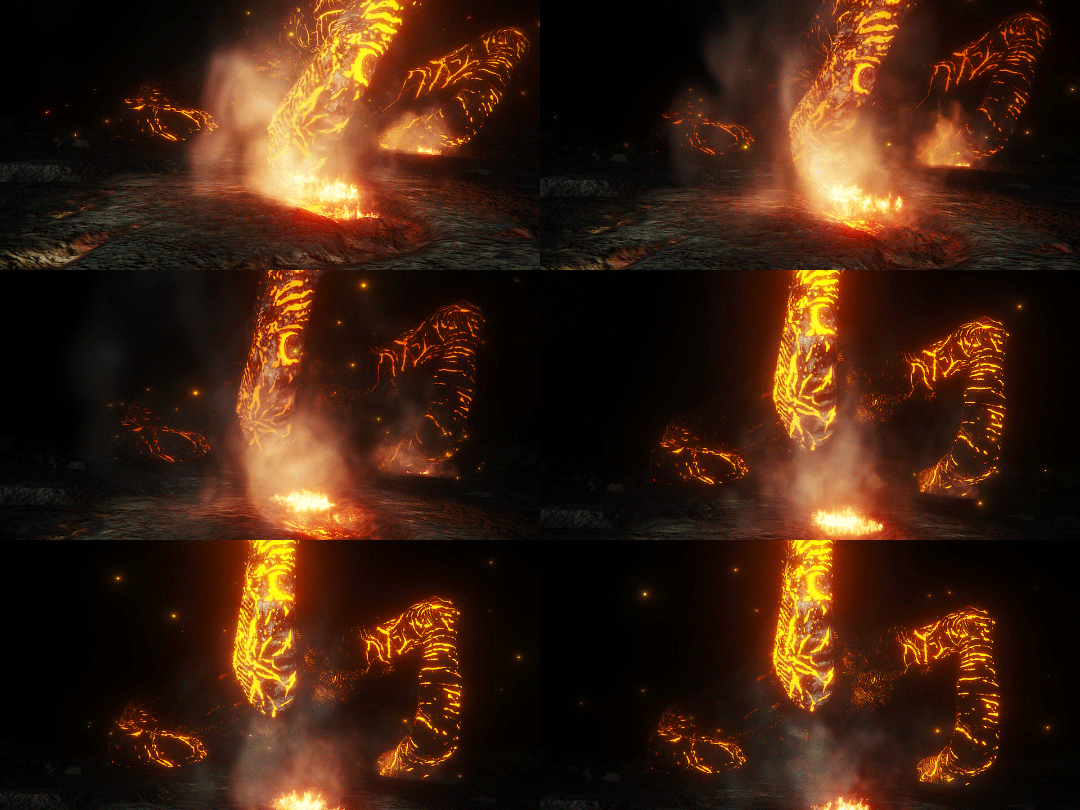
Motifs A list of repeated motifs throughout Dove's story.
Religious concerns and guilt
External Forces, power and constraint
Frightening tone, isolation and reclusion
The poetics of ruins in Renaissance Literature
The repression of desire
— s & f.
strength chart.
| STRENGTHS | FLAWS |
|---|---|
| Felicific | Overzealous |
| Grateful | Deceitful |
| Idealistic | Hubristic |
| Determined | Quixotic |
| Charming | Obsessive |
| Curious | Superstitious |
| Sympathetic | Dependent |
| Articulate | Impulsive |
A miracle so profound may be indistinguishable from horror
— hooks.
beginnings
Aiding others Given Dovanghelia's role and demeanor, it'd not be unusual to find her attempting to give herself to those in need. Given her nomadic tendencies her place of residence isn't limited to The Dravanian Forelands.
Guiding Maiden Although guided by the Flame of Frenzy, and harboring no cruel intention, Dovanghelia acts as a supporting stone in the journey of others, often appearing randomly and conveniently.
And melt it all away Dovanghelia most immediate desire is to suffocate the flame that inhabits in the back of her eyes as it presents itself as a figure of her own personal torment. This overwhelming feeling will only meet its conclusion once she's claimed by the Three Fingers, someone somewhere must know something about them. She must assume her own penitence
Flashback Although the abbey's doors were sealed with utmost care and concern, someone must've felt the fervor emanating from within its walls, echoing through its chapel. Someone must've found her in her grief.
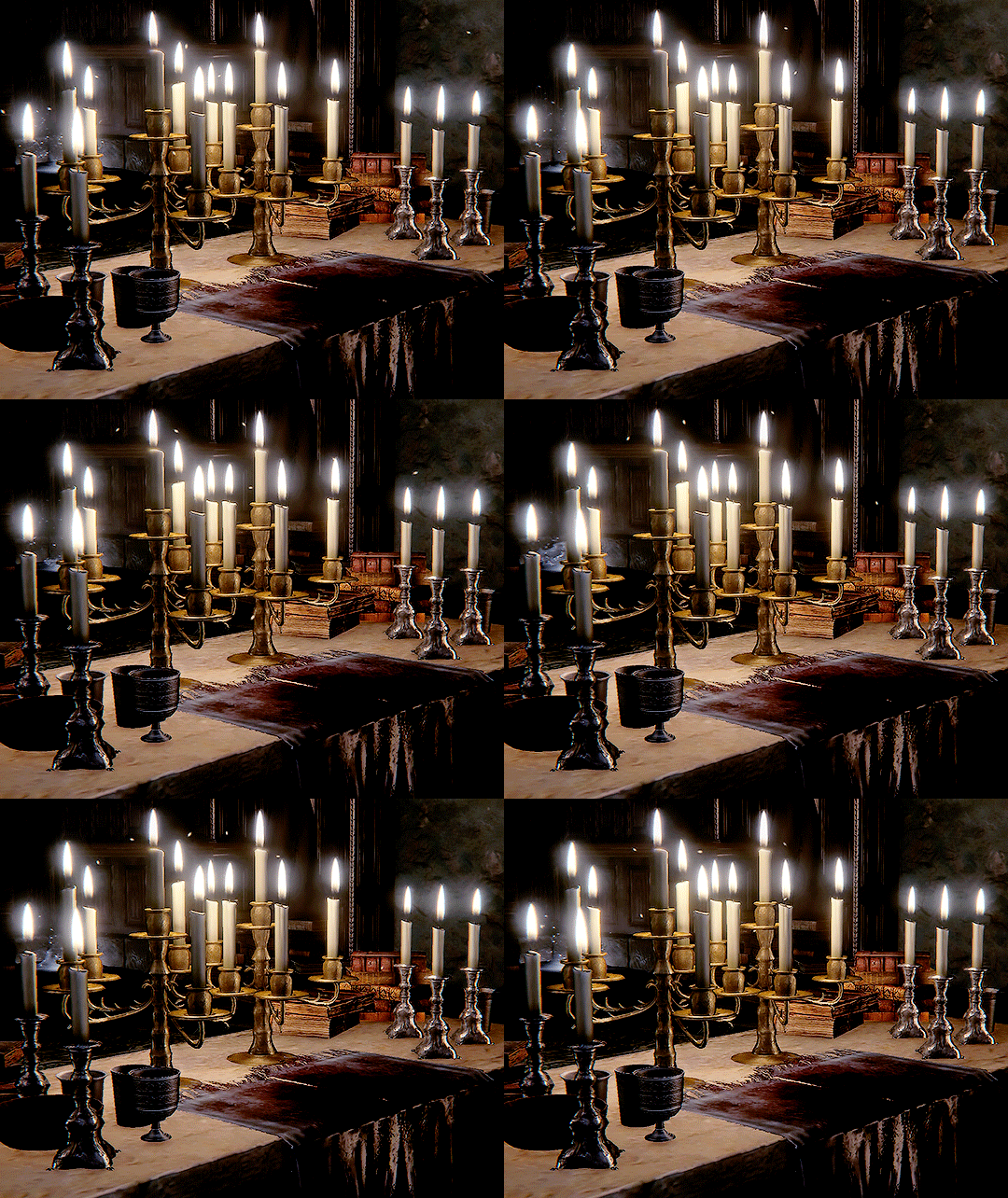
— playlist.
inspiration.
♪Midra, Lord of the Frenzied Flame Elden Ring, Shadow of The Erdtree OST.
♪Page's Flute Song Elden Ring Original Soundtrack♪ Silent Messenger Desiderii Marginis♪ Angelus Desiderii Marginis♪ Land of Strangers Desiderii Marginis♪Lullaby for Mergo Bloodborne Original Soundtrack.♪Micolash, Nightmare Host Bloodborne Original Soundtrack♪Moonlit Melody Bloodborne Original Soundtrack♪Floating Leaf Alexandre Desplat, from Frankenstein (2025) Original Soundtrack.♪ Eternity Alexandre Desplat, Eldbjørg Hemsing from Frankenstein (2025) Original Soundtrack.
— stats.
character stats.
| STATS | RATING |
|---|---|
| health | ★★★★★☆☆☆☆☆ |
| strength | ★★★★★★★★☆☆ |
| tenacity | ★★★★★★★★★☆ |
| stamina | ★★★★★★★☆☆☆ |
| intelligence | ★★★★★★★★★☆ |
| dexterity | ★★★★★☆☆☆☆☆ |
| perception | ★★★★★★☆☆☆☆ |
| creativity | ★★★★★★★☆☆☆ |
| charisma | ★★★★★★★★☆☆ |
| social skills | ★★★★★★★★★☆ |
| empathy | ★★★★★★★☆☆☆ |
| confidence | ★★★★★★☆☆☆☆ |
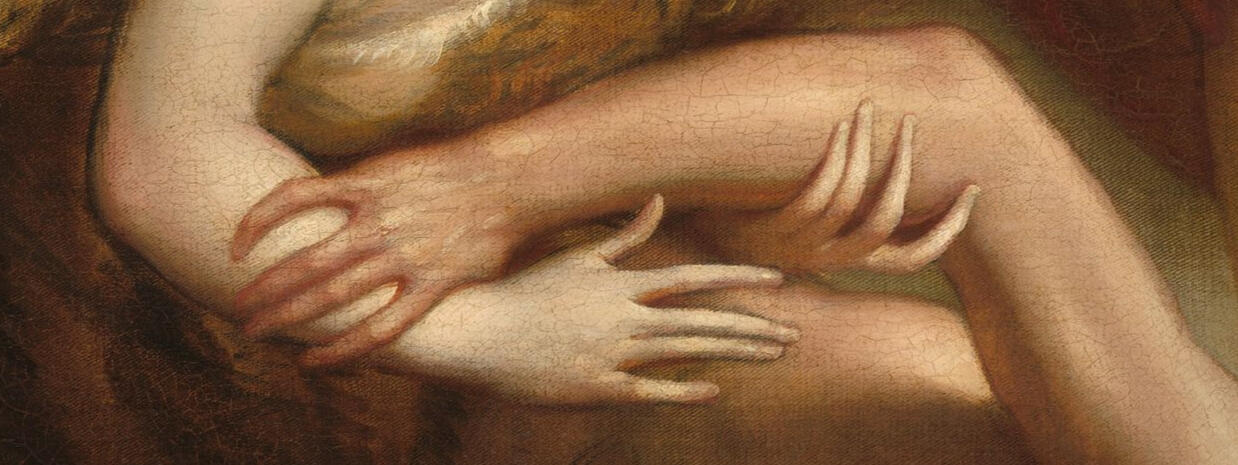
Biography
A miracle so profound may be indistinguishable from horror
— origins.
the beginning
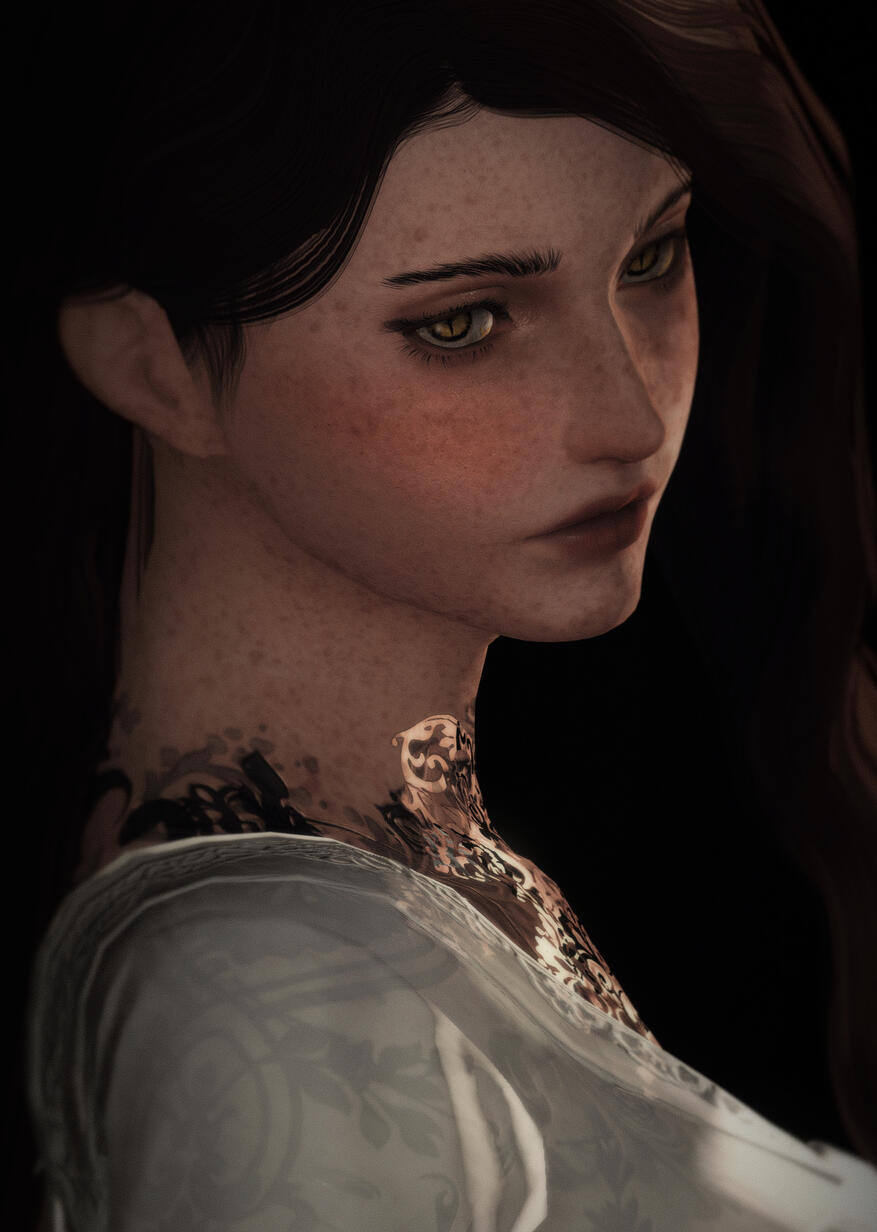
“Grant us eyes, grant us eyes.”
Little was known about Dovanghelia's biological parental figures as the only existing biographical records state the lie that she was anonymously left at the abbey's foundling wheel, while others claim that she was one of the first children offered through sacramental child oblation in order to discard what was considered a wound of stigmata. Unlike other children, Dovanghelia was never successfully adopted, a few attempts were made, each one of them futile; the guardians, in their brief time providing care, claimed being perturbed by her thus provided it as a reason to justify the cease of their care, claiming that there as an “air of unease” and discomfort whilst in her presence as if “she wasn’t human” thus unable to identify her as kin or palpate an emotional connection. Dove wasn't, and to this day isn't, aware of the facts; they were hidden from her out of commiseration.During her late teenage years there was an attempt at escaping, Dove managed to interact with children found in Coerthas, eventually reaching Ishgard's gates yet she was delivered back to the abbey and, as consequence, treated as something akin to a convict; with the role of undertaker forced upon her, which ultimately lead her to become familiarized with the perennial nature of life and acceptance of death. Carried by nothing more than inertia she decided to adopt a life seen through a monastic lens, even after reaching the age of discretion which finally offered her free will to abandon the abbey, yet her flickering faith would permeate her mind and overflow it with questions surrounding beliefs that she doubted were her own. Her chores eventually changed, and she was tasked with the care of apiaries from age sixteen until the events that followed the presence of the Frenzied Flame and the abbey's disintegration.
"When the world rots, we set it afire. For the sake of the next world. It's the one thing we do right, unlike those fools on the outside."
Dovanghelia would continue her regular tasks until the arrival of the Eclipse of Rot in the Dravanian Forelands. Pressured, engulfed by desperation and forced to find a solution to starvation on her own, she directed her gaze to alchemy and methods that, while considered unorthodox, would aid the abbey and its nearby annexed priory. After the Eclipse, Dovanghelia would be the one noticing the multiple depraved processions for and on Eldenievel's name in an attempt to catapult her figure to that of a holy one.Dovanghelia would be the founder of the Kissers of Rot, a faction whose main attempt was nursing those afflicted and suffering, these would even kiss scarlet rotted individuals without fear of being infected; the succession of these events triggers her scintilla to quietly begin rebelling against Eldenievel and what was brought with and because of her.The Flame of Frenzy would consume the abbey, maiming its arteries and inhabitants. Dovanghelia would seal off the monastery's gates and endure the caliber of the flame in its isolated chapel, hoping it'd end her and with her.
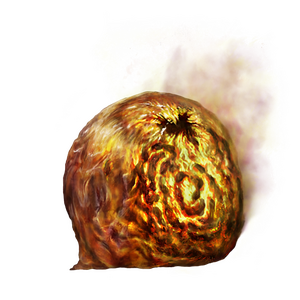
This event's apogee would arrive with Dovanghelia's voluntary extraction of her own spine through oral means; turning it into her own weapon. With the spine's fragments left behind, after each encounter, receiving the condition of relic, their acquisition proves itself rather precarious given the fact that these detonate into flames of frenzy in dissimilar, unexpected paths; their own act of self-preservation, perhaps.
Dear, oh dear, what was it? the hunt, the blood or the horrible dream?
— di viegardis
the beginning
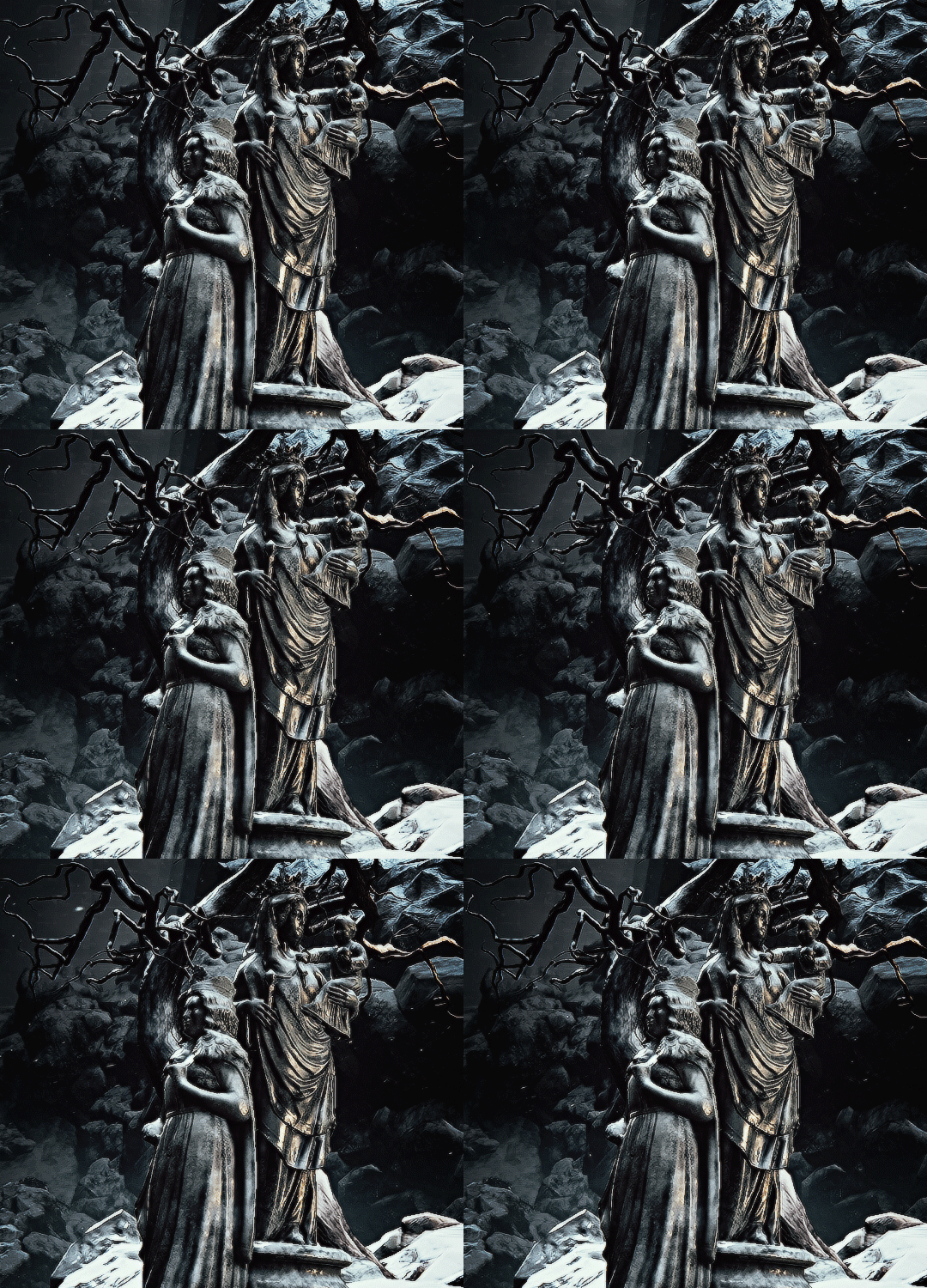
“Drink deep of our blood... Feel the spreading corruption burn. ”
"Fear the thirst of blood. I should know. I was was once a Blood Saint, too."
Considered "impure" by the Healing Church, to the extent of trying to taint their last name as "Di Vilegardis" in a puerile, hypocritical attempt driven by the wish to eradicate the struggle of rivalry thus crowning itself as the sole bearer of Old Blood, they were a now extinguished (by the Church's hands) Coerthan House.Not particularly welcome in Ishgard nor Dravania, yet their existence predated both and never ventured beyond their birthplace. Di Viegardis's approach to blood and its consumption (from their Lady, whose blood became in contact with that of a Great One) through communion earned them both rigid judgment and immeasurable isolation from its contemporaries. The further the metamorphosis of their blood, the closer it brought them to the Great Ones.
"With the power of blood originating from echoes, which are also referred to as "spirits in the wills of the dead/blood" and death being considered impure, blood rugs are produced from large quantities of blood echoes; the cold blood found in most of them being that of the Great Ones, as it becomes concentrated with echoes it begins to take on cosmically nightmarish properties similar to the Great Ones's and the properties within it can be used to produce a Great One infant: a child of blood. "
Dovanghelia's metamorphosed blood, its closeness to the Great Ones, is what cursed her with becoming the Healing Church's chosen child; simply because of her birth condition Dovanghelia supposed a threat to the Church's ability to control blood, thus their interest in abducting, confining and controlling her.
Her existence alone threatens the organization and its propaganda, thus undermining its religious authority; her adoption was nothing but a mere act of damage control after the deliberate wrathful massacre of her predecessors in the hands of the Church's executioners, with this simultaneously explaining the halo of mystery they insisted on projecting around Dovanghelia's arrival to the Abbey.

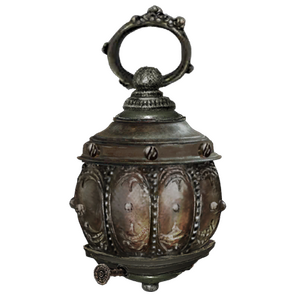
“Is someone there? Well, whoever you are it matters not. I will not die, tarnished as I am. You came here for naught, be off with you.”
A miracle so profound may be indistinguishable from horror
— her pregnancy
Every Great One loses its child, and then yearns for a surrogate
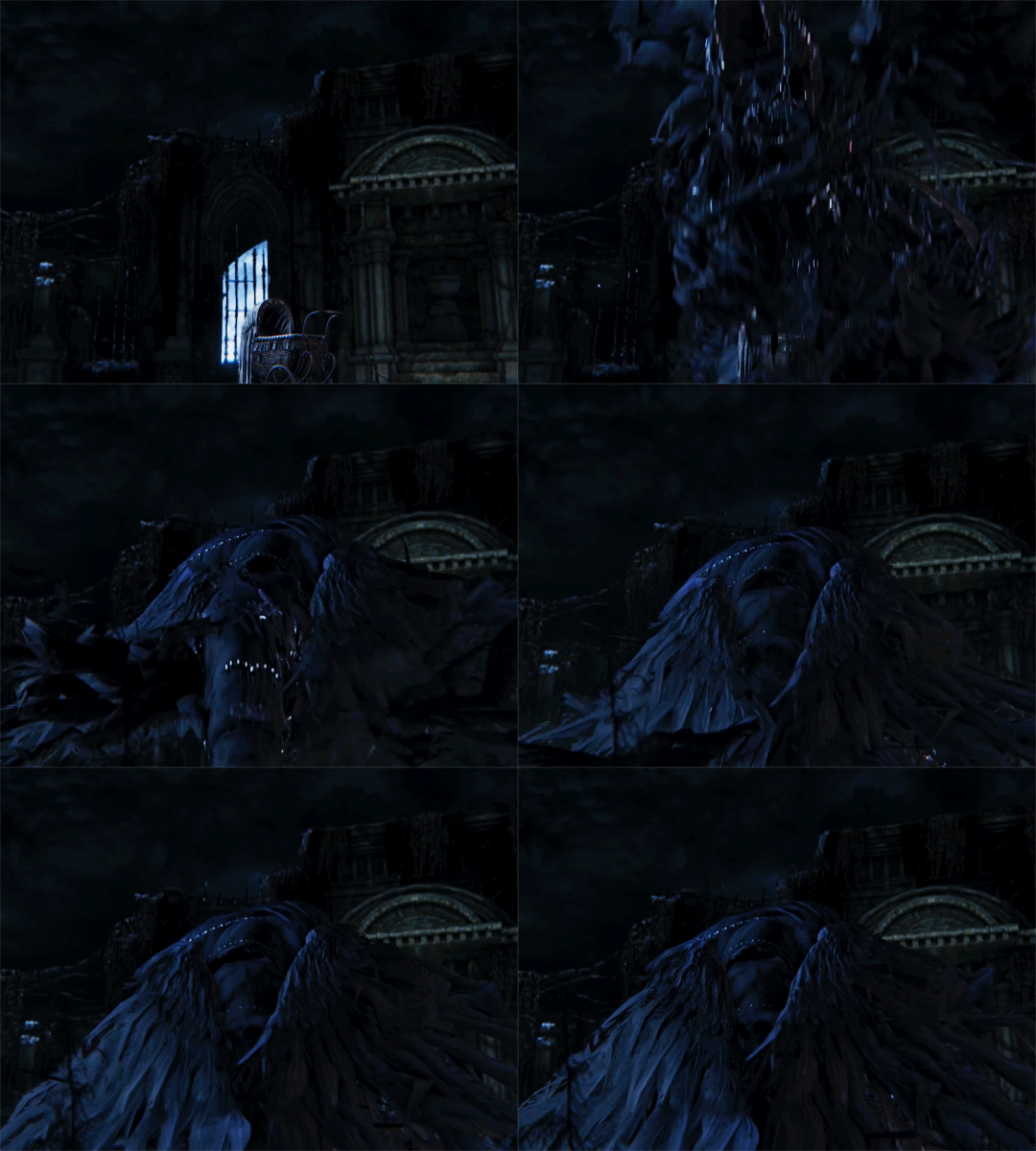
“Horror shapes character. And it did happen.”
The reason why Dovanghelia became a surrogate candidate for an unknown Great One remained covered in a halo of doubt and mystery for a long time, though it was theorized that it was probably due to the coercion suffered by the hands of the Church of Healing, more specifically The Choir, that brought this Great One's attention to her.The multiple traumatic aspects of this event appear the moment of realization; inflicted upon her, along with its macabre psychological impact, it'd not only reduce her to a womb but also severely threaten her life given the uncommonness both of the impregnation approach, known as eldritch liaison, given the fact that the Great One's formless and only exists in voice, yet is able to permeate reality; along with the nature of the pregnancy itself, happened to be abdominal, and the verbal abuse inflicted by the exploitative members of The Choir upon the discovery of the failed attempt. Dovanghelia's blood condition (its inability to form clots) would only expose her life to a higher mortality risk.
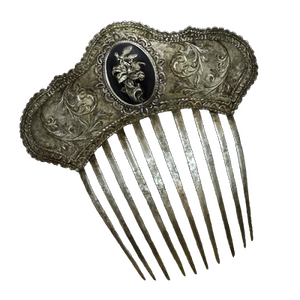
This gravidness would result in the calcification of the fetus remaining within until Dovanghelia, by her own means, expanded the already existing fissure in her chest until it eventually reached her abdomen; extracting it and performing her own hysterectomy, with her uterus incinerated by the Flame of Frenzy afterwards in order to prevent the Healing Church to consecrate it as a Blood Saint relic. No Blood Moon became eyewitness to the birth of a Great One's infant and thus she, horrified by everything witnessed and experienced, would flee, hiding as far as she could from the Healing Church and consequently the members of The Choir.
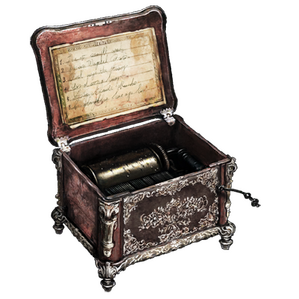
A pregnancy that was both devastating and a intrusion of the body, little did Dovanghelia know that its grotesque fingerprints and tinctures were present throughout history, her story; beginning with the reason behind blood's capacity to heal people along with the cost of medical breakthrough and development.
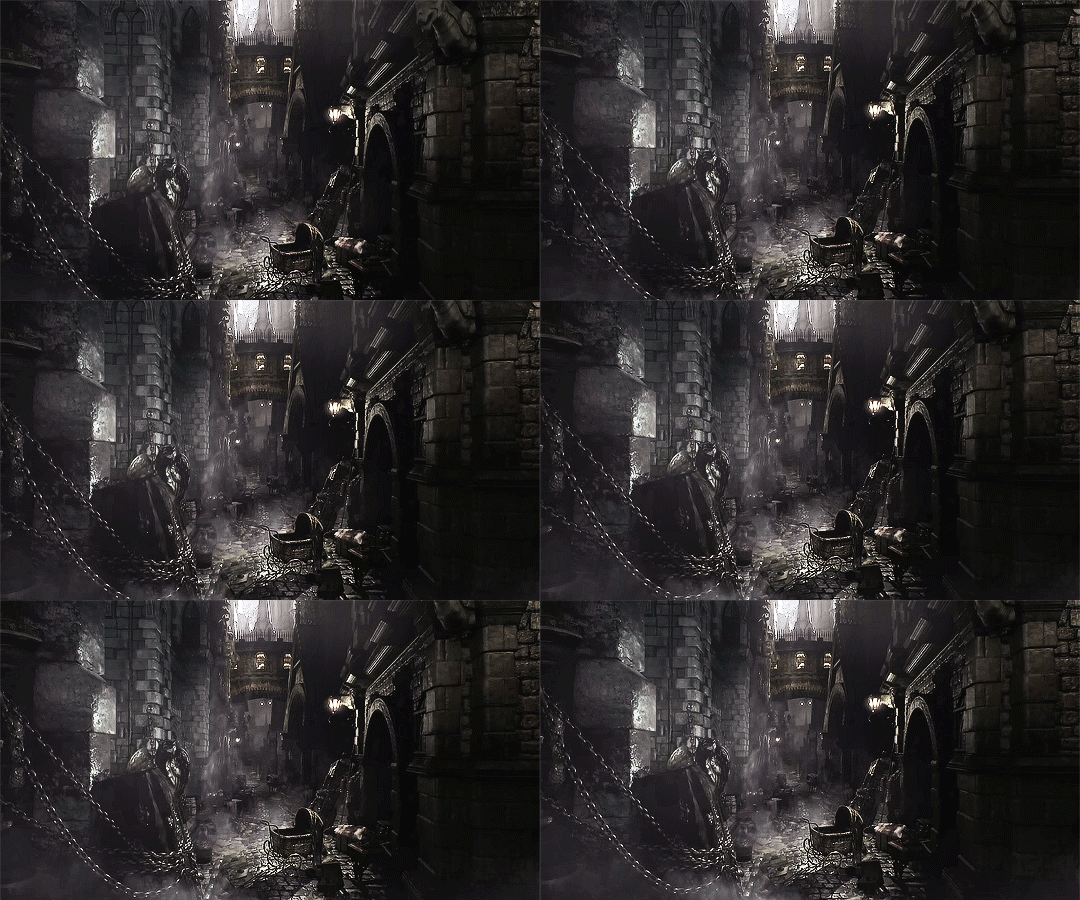
This hollowness in Dovanghelia's chest would soon accommodate a frenzied beehive, which would oftentimes present itself as a single honeycomb for others to feed on.
A miracle so profound may be indistinguishable from horror
— the healing church
and The Choir: Part I
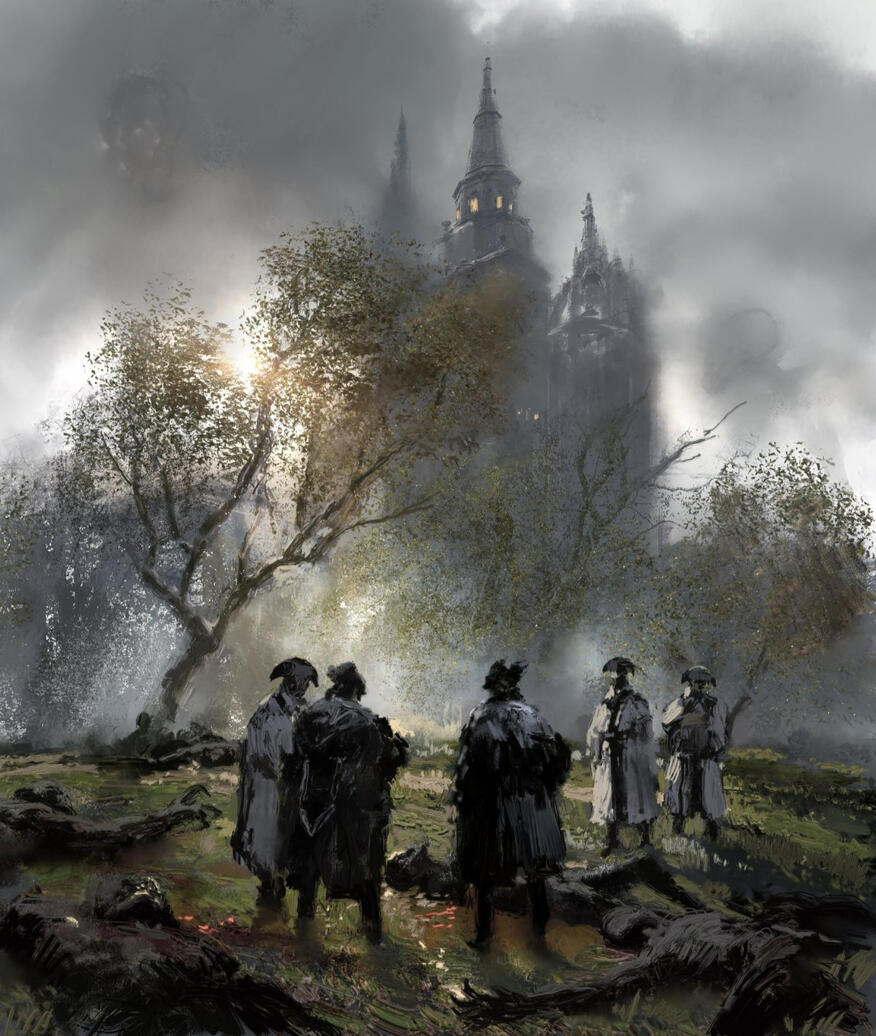
Artwork by: Espen Sætervik
It all resumes with Eldenievel and her abandonment of self, with distinct attention to the blood burgeons that bloomed after this act of self discarding that followed the Eclipse of Rot. Naturally, her blood remained rotted. Dovanghelia, in a desperate act, would harvest these with the intention to cultivate and, later on, alchemize them. This, proved to be a breakthrough, would symbolize the beginning of phlebotomy, blood transfusion and ministration (blood transfusion and bloodletting) within the Abbey's walls and the emphasis of the Healing Church's presence after its age of fracture given the schism born from the friction between factions. In times of need and afflicted by the rot plague, people naturally gravitated to it, even if only as last resource. The fact that the Church was founded upon someone's skull, and keeping in mind both canonization and the religious definition of relic, gives us a clue that this unknown figure was revered as a saint.
"We are born of the blood, made men by the blood, undone by the blood. Our eyes are yet to be open, fear the old blood. "
Whilst these events develop at their own tempo, the Flame of Frenzy has already established itself within the Abbey's walls in a rather dormant fashion; quietly flickering, remaining unnoticed, its appearances sly and bold, awaiting. Probably one of the first signs of its presence is the absent of rot related infections, given that fire is the ultimate cleanser of rot (and, in a fast forward, the Abbey's fire —a fire that would last for five days—, would lead to the temporary halting of the plague and the contagion of rot-afflicted victims), in the community. The Kissers of Rot, a fraction of believers, would deliberately act as their name implies; providing kisses to those suffering by the presence of the plague with oneiric roots. More figures would arise too, like these of Blood Saints: nuns whose blood was, too, cultivated; Dovanghelia would be forced to become one of them and, being the youngest, the one in the most vulnerable position to be manipulated to the abbess, clerics and the diocesan's wills.
Her lack of any smell, that followed her since the day of her birth, begins to be replaced by an unknown, never recognized before: the scent of the Moon. The first human to human transfusion is performed by Dovanghelia in a hesitant yet successful attempt to treat a patient suffering from postpartum hemorrhage; her presence and essential knowledge as undertaker would be required by The Choir's (the Healing Church's higher delegation, founded by Anatomists, Resurrectionists, Undertakers and Tomb Prospectors in order to seek audience with the Great Ones with the pretension to ascend Humanity) Tomb Prospectors during their explorations in Ishgard's underground labyrinths, a research attempt that would eventually lead them to traces of the Old Knowledge (the Eldritch Truth about the slumbering Great Ones), a very sudden and quite accidental epiphany said to be so devastatingly profound that it even took over their minds, phantasms rebellowing time and time again in their imagination.
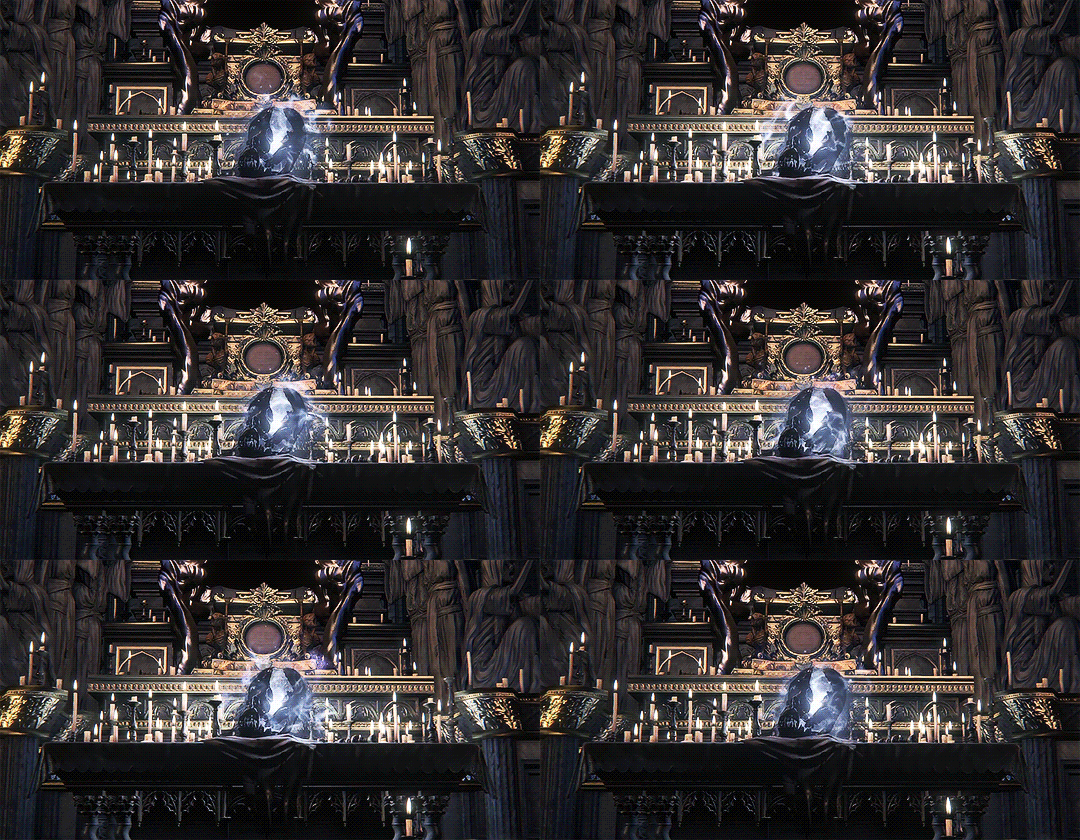
"When all is melted in blood, all is reborn."
The Healing Church would also attempt to have the Churches of Rot, structures derived from the presence of Oneiric Omnificence left in the Forelands' stratum after the Eclipse of Rot (also regarded as the "First Plague"), repurposed as their own over the course of its first years of renaissance. The Healing Church's iconography then begins to multiply, reaching and finding home in Ishgard, seizing its victims with the aid of its own resurrectionists too.
A miracle so profound may be indistinguishable from horror
— the choir
Continuation of "The Healing Church", Part II
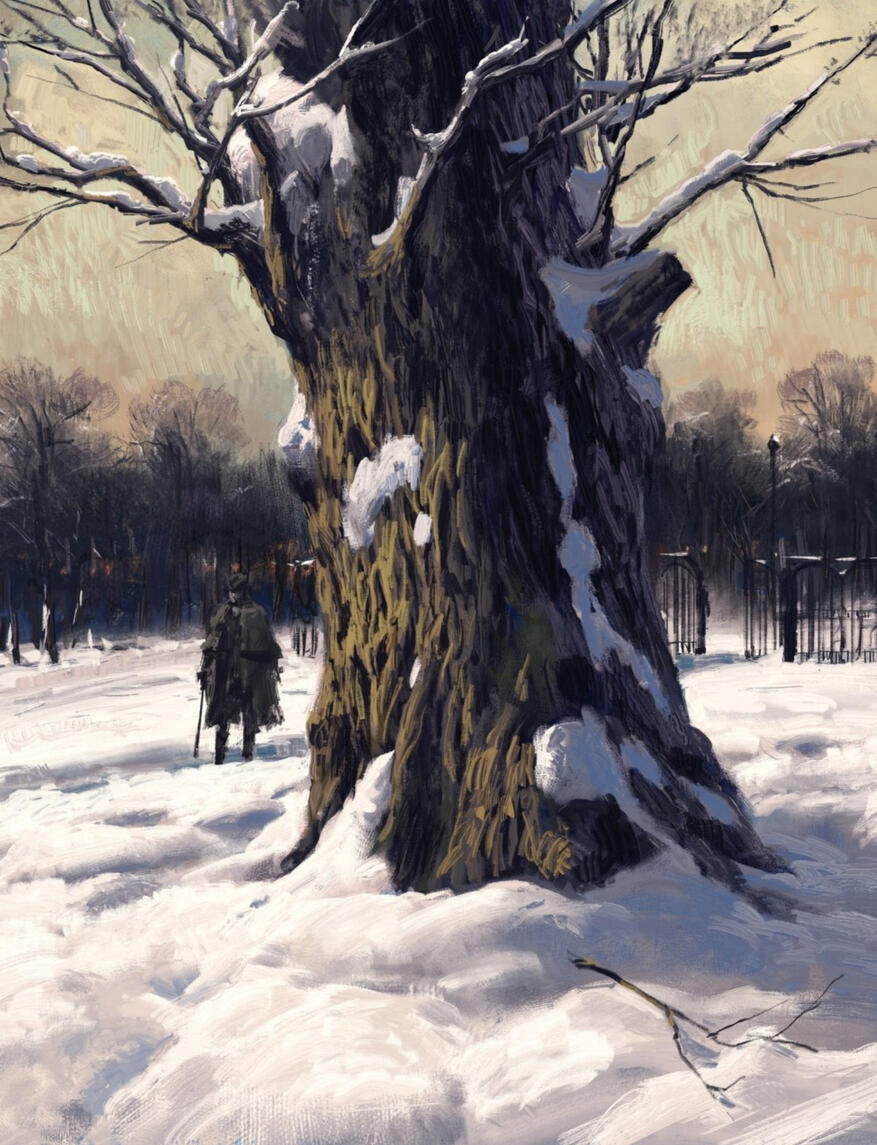
Artwork by: Espen Sætervik
It is then revealed that Dovanghelia, whose roots were unknown, was the descendant of a line with an proclivity (better called fetish) for blood. Ironically, Dovanghelia suffered the same fate as the one inflicted to others by her familiars, turning her into a stagnated sufferer. Unlike Eldenievel's blood, Dovanghelia's remains uncoagulable, able to be reserved in any vessel without limitations, its use sempiternal.From the Healing Church's (most specifically The Choir's and their transgression of existing life) perspective, Dovanghelia's existence is reduced to that of a surrogate mother of a Great One thus the accessibility to miraculous blood or rather employing her and her fertility as their source for the arrival of a celestial child during a Blood Moon; her figure desired to be propelled as that of Madonna by those who believe in communion with the Great Ones, her position plagued with grotesque tinctures in an attempt to their own definition of greatness, reduced to a womb for a Great One that loses its first child and yearns for a surrogate. In case this ritual was meet with futility their second option would be that of metamorphose her into an Ascended Great One, in order to keep her sealed within the cathedral in a ebriety state in order to extract her blood and employ it as the fresh one.
"I was walking along the road with two friends – the sun was setting – suddenly the sky turned blood red – I paused, feeling exhausted, and leaned on the fence – there was blood and tongues of fire above the blue-black fjord and the city – my friends walked on, and I stood there trembling with anxiety– and I sensed an infinite scream passing through nature."
Focusing on The Choir, which has been mentioned previously, they are a body of communicators belonging to the Healing Church whose main ambition appears to be the elevation of thought through (old) knowledge; reason why Dovanghelia was petitioned to assist tomb prospectors taking the role of undertaker. The Choir is, too, responsible for the kidnapping of young orphans within Ishgard's walls, extending its influence to Coerthas and arising within the walls of an orphanage; these would be raised in isolation with the purpose of using their insight to the Church's benefit, studying the Great Ones and the Cosmos, paving the path to new conclusions regarding the ascension of Humanity.
The Choir is responsible, too, for infesting water with otherworldly microscopic life in an attempt to magnify the reach of their scholars' insight (their "eyes") and listen to the ocean's melody given its association with the Great Ones. The sound was also regarded as the voice of a celestial custodian, leading those to the absolute epiphany; this would take a toll on their mental health (and progressively become addicted to, as if they were psychoactive drugs) overwhelmed by the illusion of the howl of the sea and the feeling of drowning. Their brain fluid writhing inside their head, the initial makings of internal eyes.
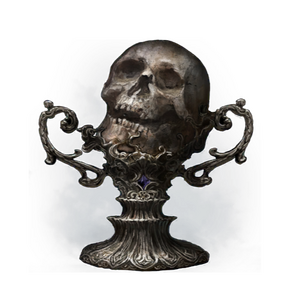
"Here we stand, feet planted in the earth, but might the cosmos be very near us, only just above our heads?"
Soon enough, with her proven proficiency as anatomist (after being taken as student) and contributions to labyrinth dwelling alongside with Tomb Prospectors as an excuse, and in an attempt to both isolate her and have her under constant inspection, Dovanghelia would be accommodated in her "own" clinic within The Choir's walls. Dovanghelia would receive cadavers in order to dissect and inspect them, especially the deceased under capital punishment/offense such as those convicted of murder; whose burial would be denied, their bodies turned over to anatomy schools. Given the fact that more bodies were still needed, Dovanghelia was presented with the opportunity to body snatch and corpse selling, yet deemed it unthinkable; she rebelled quietly against this act by inventing the mortsafe/mortcage, a construction designed with the purpose of protecting graves from resurrectionists. She would also wrap chains around coffins in an attempt to protect them from being defiled, leading to the creation of funeral vaults.Later on, a new School of Thought would be born within the Healing Church's walls; focusing on optics and mirrors, and the nightmare. The hippocampus and perception of reality, its evolution from a periental eye, the limbic system, parasites and the government of the amygdala.
A miracle so profound may be indistinguishable from horror
— mensis
and The Nightmare
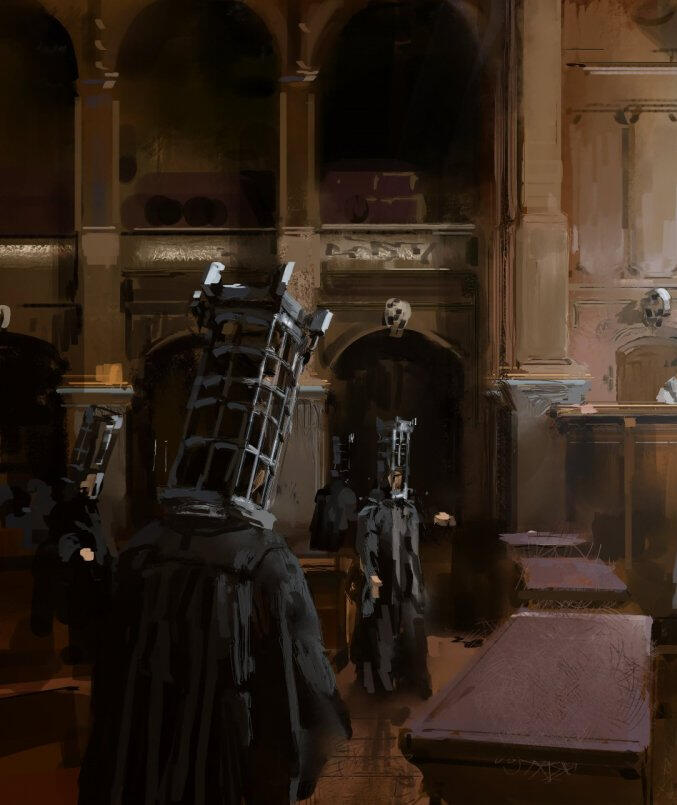
Artwork by: Espen Sætervik
Mēnsis m (genitive mēnsis); third declension.
School founded alongside The Choir in an attempt to focus on physics, which eventually lead towards the modernization of the ongoing era. With their primarily focus on the Moon and etymological roots evoking the monthly coming of the Moon along with the coming of blood and, as a consequence, the Blood Moon. Both optics (consequentially reflections, more importantly those of the Moon along with light, its own too) and electromagnetism play fundamental roles in the development of the School, placing them as main focus and subject. It's common to find light sources (such as lamps, even candles) in the surroundings of reflective surfaces, whether they're mirrors, metals or even pools of water; this places Dovanghelia as an optimum tester given her connection to beeswax, the fact that she's able to feed candles off her blood and transmute its matter, turning it infusible.On the topic of mirrors, metals should also be taken into consideration given that their polishment gave access to the first handmade reflective surfaces before the research of glass coating; and so should liquid mercury, given its properties (and benefits, compared to those of its solid equivalent) which lead to the physical metamorphosis of some scholars, as they happened to retain the substance, previously one of their studied optics elements. This lead to the discovery of the relevance between light, any surface able to mirror to that of gateways to other planes and even nightmares; establishing a link between Dovanghelia's and the Ritual.
"Have you seen the thread of light? Just a hair, a fleeting thing, yet I clung to it, steeped as I was in the stench of blood and beasts. I never wanted to know, what it really was. Really, I didn't."
And so the thread of light was never revealed — yet it lived, taking the shape of an ocular worm-like parasite; feeding phantasms, familiars of Great Ones, an intimate relationship to botany —yet reserved to its Oneirocelestial branch— and absorbents of lunar photosynthesis can be observed, feeding off of the celestial satellite.
Individuals afflicted by these are keen to be visually mesmerized by items containing the essence of the Moon; an vision impressed upon their amygdala —unwillingly feeding the parasite with the glow's energy— thus their emotions. Upon closing their eyes, the afflicted can visualize the aforementioned thread of light; a rhapsodic, serpentine cord inhabiting the surface of their eyeballs.These parasitic lifeforms act as twisted guidance, an immediate threat given the infliction of subjection. Considering that eyes absorb the Moon's energy, it makes its way through the brain and causing the bloom of insight. It is also worth mentioning that the "eyes on the inside" (insight) refers to the hippocampus, structure responsible for the release of dimethyltryptamine and the perception of reality; its govern extending to the amygdala. This knowledge would bleed through and pervade the Healing Church, thus leading to the practice of bloodletting as mean to get rid of the vermin; or at least an attempt to do so. It's worth mentioning that the presence of water —especially running water, as it shows a clear connection to cleansing, purification— appears to be a relevant in direct relation to the adoption of the bloodletting technique.
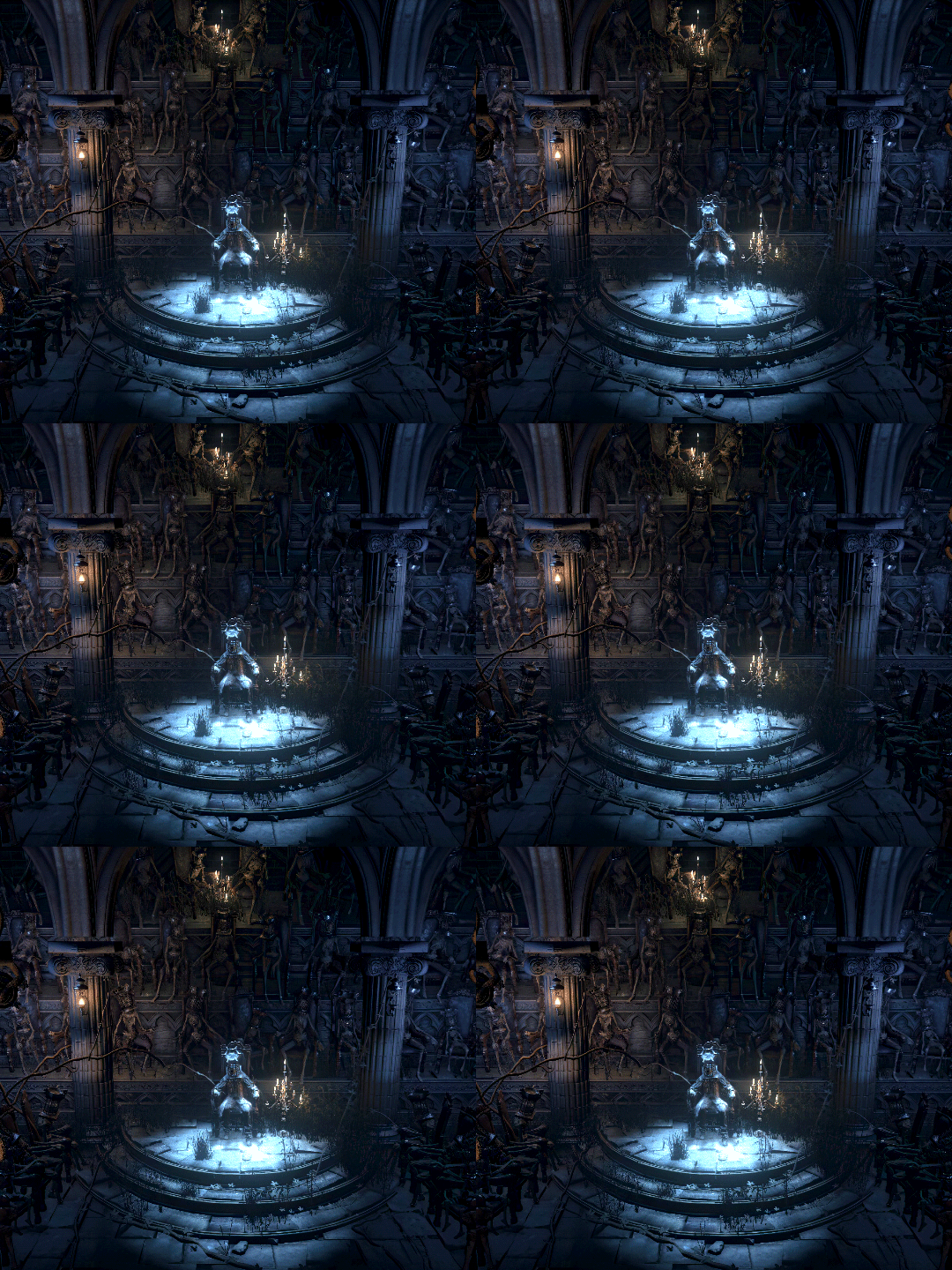
As a recount of all this knowledge, the presence of the Moon over bodies of water propels parasites to thrive in the environment, as well as the presence of flora; not only fed by the satellite itself, but also by the waters. Insects appear to be affected by this, becoming hostile and also referred to as "Gardens of Eyes", given the multiplying multitude of globular organs inhabiting their bodies.
Note: The fact that the ocular parasites act as guidance suggests the idea that the Flame of Frenzy is, too, a different kind of parasite yet it doesn't share similarities to what was previously observed.
A yearning, something i've never felt before
A miracle so profound may be indistinguishable from horror
— frenzy
The Amygdalae and The Three Fingers
Having already established the connection between the act of rot cleansing through the frenzied flame, the remaining fraction still to be illustrated is the relation between frenzy and the amygdala, as we know it and expanded. The origins of the flame seem to be obscured by a halo of mystery yet it's first documentation dates back to the fire that afflicted the convent in which Dovanghelia performed her monastical duties and would eventually remain as sole survivor; testifying that, in an attempt to forestalling the dissemination of the flame through common areas and dormitories, door frames were profusely sealed and blocked with beeswax. It's worth noting that these actions were taken without the revelation that bees themselves seemed to have already become an agent of the flame of frenzy, metamorphosing them into the surroundings' closest transmitters and secondary source.
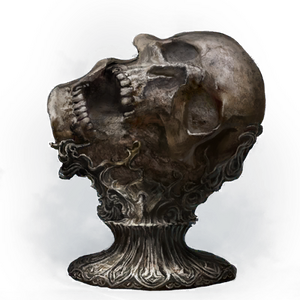
Frenzy seems closely related to Eldritch knowledge (also known as "Truth"), or rather the human incapability to process insight and its different strata; its symptoms and effects are psychosomatic, simultaneously hinting the importance of the presence of the amygdaline complex, its growth and the way it apprehends and assimilates emotional responses and memory, among others such as decision making. In sum, the exposure to insight (doesn't matter how succinct) unscrupulously recalibrates the balance; the correlation is directly disproportionate, the higher possession of insight leads us to a lesser chance of frenzy invulnerability. The subject's mind might understand scattered and infinitesimal fragments of the aforementioned Truth (as far as parallelism might take it) and as a response the brain, in a ponderous, desperate and futile attempt to fill the gaps that remain unsolved and untold, quickly accommodates its room for hysteria.
The emissaries of the Frenzied Flame can be divided into two categories, the Three Fingers and Amygdala, both closely intertwined; while the presence of the fingers is unique, Amygdalae (as their own name suggests) are plural and their presence can be found scattered throughout the world, yet their tangibility remains a conundrum. This pair of beings share physical characteristics and typical patterns, their amber and Stygian accents (which draws similarities with bees) the most accessible to notice. The six fingers possession of Amygdalae serves as yet another suggestion that the Three Fingers might've originated from one of them; following with the physicality analysis, we are drawn to the perception of a multitude of a plague of eyes of a yellow tinge residing underneath an almond-like shape structure that could be well described as their crania; the relevancy of their mention lies in the fact that the characteristics found in these are exactly the same as the appearance a victim's eyes adopt when afflicted by Frenzy.
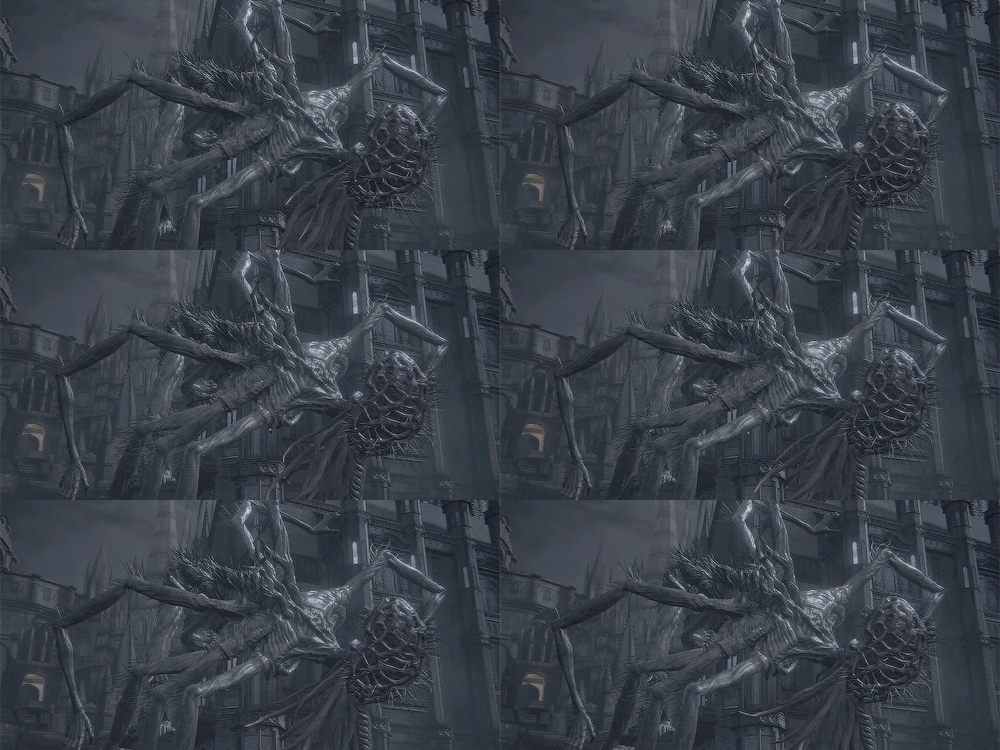
This landscape, composed by a plethora of compelling and symbolic events, brings Dovanghelia as a figure of frenzy; adopting the shape of a rather disoriented force. With a chest cavity now populated by a frenzied beehive, which influences the blossoming of frenzied honey, whose patterns and textures firmly resembles that of the Three Fingers, its colours simultaneously matching the ones found in her frenzied eyes.As it's been previously told, the Flame of Frenzy acts a more subtle, even minor, parasite when compared to the "Thread of Light"; its influence is not heightened by the presence of the Moon, but rather knowledge beyond comprehension, the Truth and the struggle to a see a world shaped through it. Still, their ocular and parasitic nature, alongside with their amygdala stimulation, distributes them under the same category.